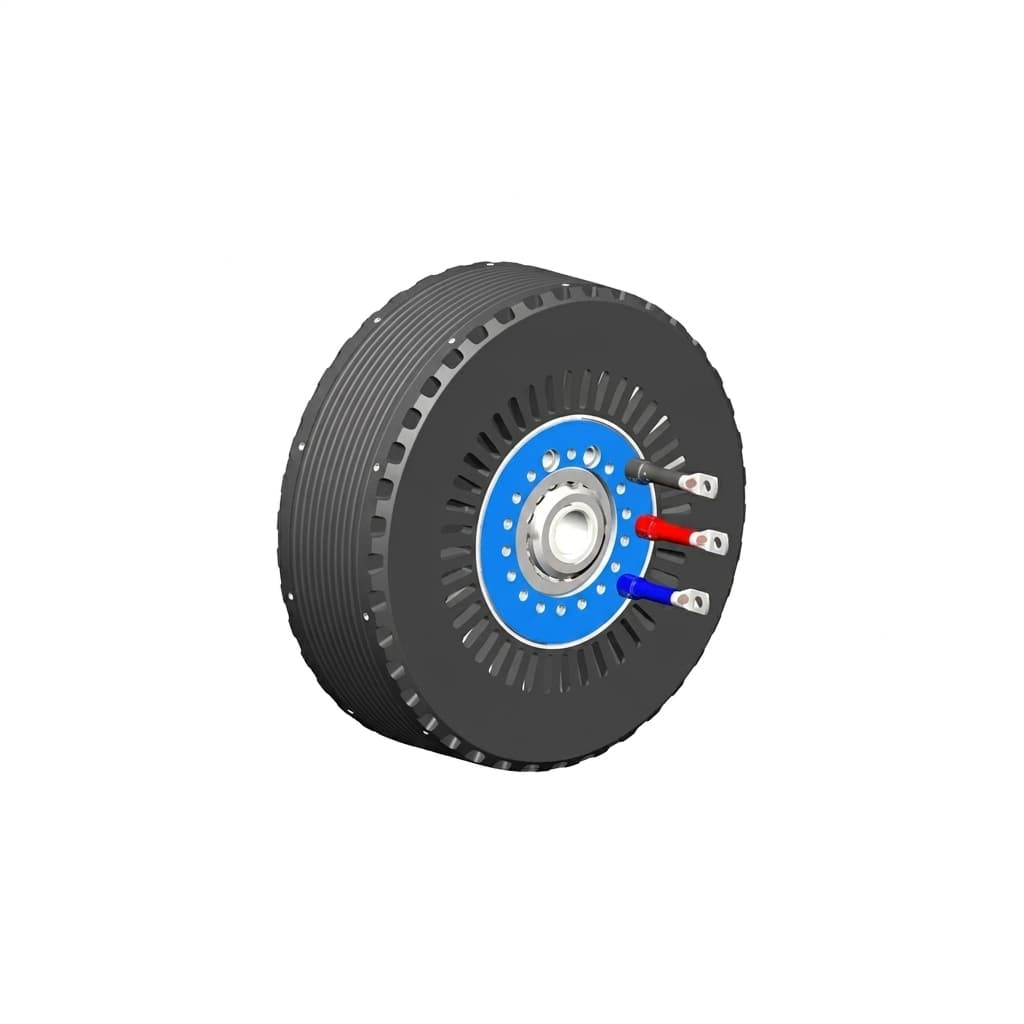
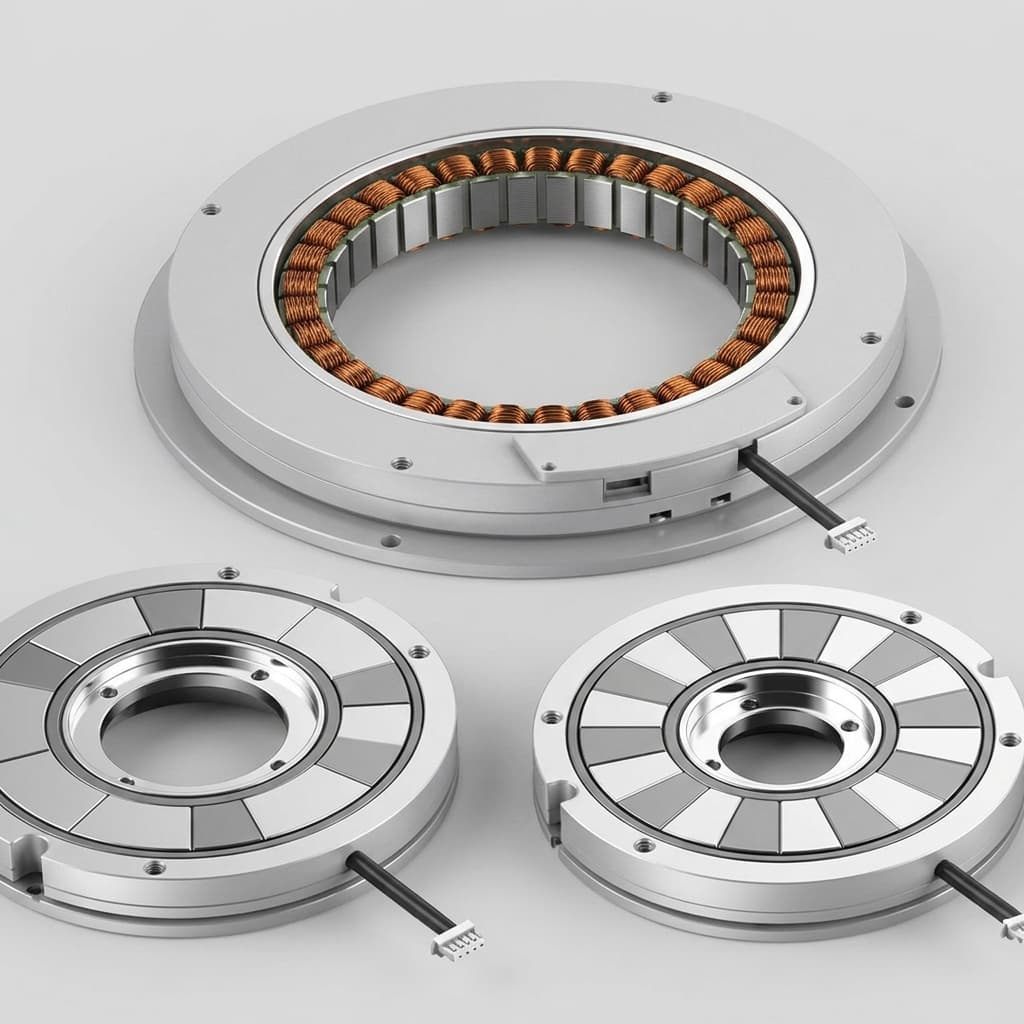
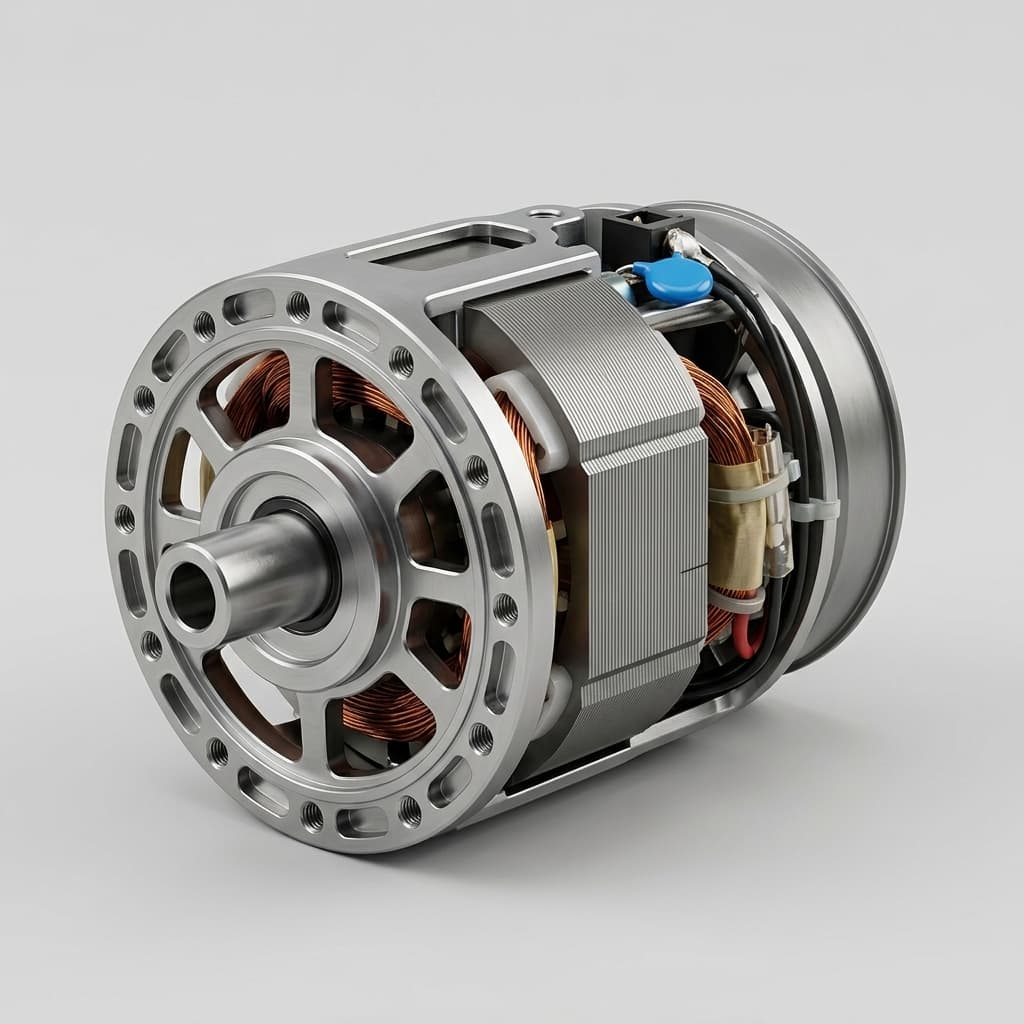
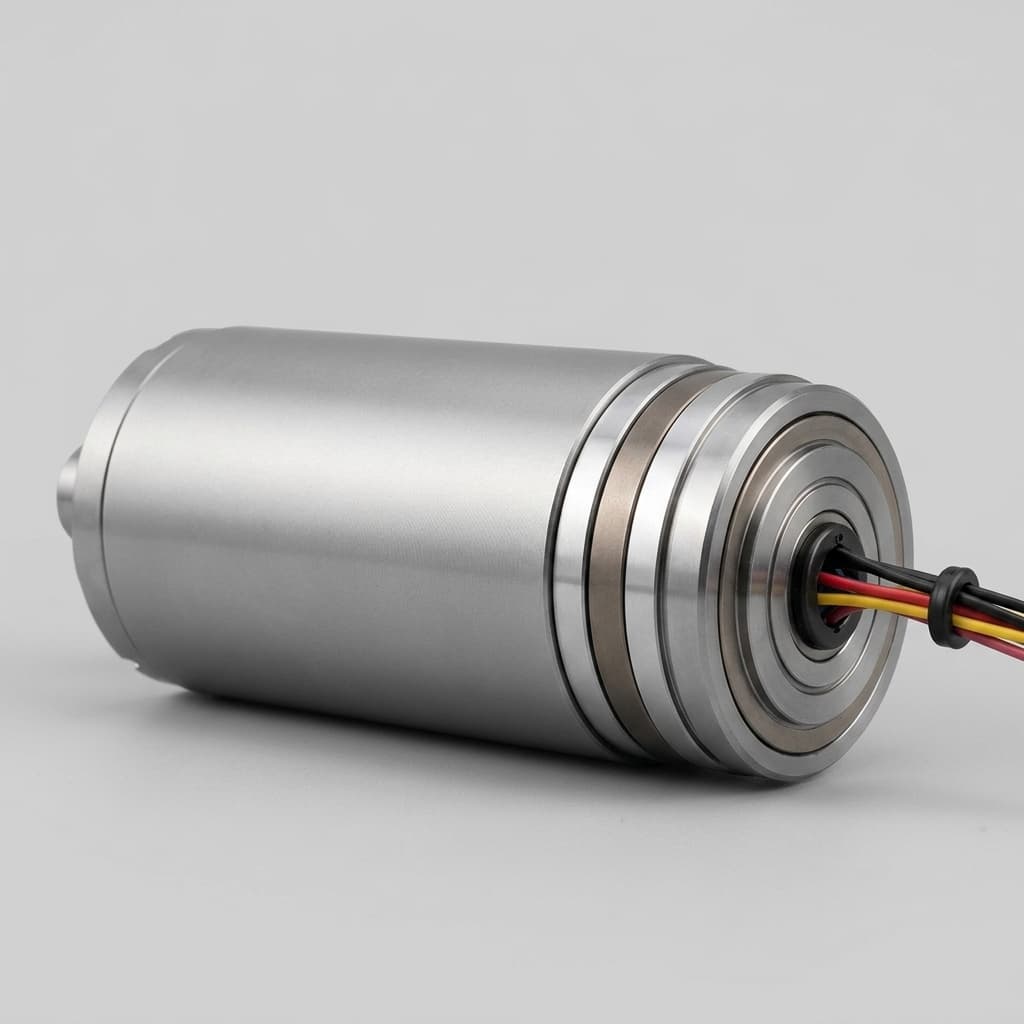
When procurement teams for food processing, pharmaceutical manufacturing, or medical robotics are tasked with sourcing direct-drive motors, they frequently encounter a frustrating paradox. The specification sheet clearly mandates an "IP67" or "IP69K" rating for washdown compatibility, yet the engineering team has specified a frameless torque motor to minimize weight, footprint, and backlash.
The paradox is this: Frameless torque motors inherently lack an IP rating.
Because they are supplied as independent rotor and stator components without a housing, bearings, or end-bells, the environmental protection must be engineered into the surrounding machine structure. The OEM integrating the motor owns the final IP rating, not the motor supplier.
This guide bridges the gap between procurement requirements and mechanical engineering reality. We will explore how to successfully integrate frameless torque motors into IP67 (submersion-proof) and IP69K (high-pressure, high-temperature washdown) environments, detailing the critical trade-offs involving thermal derating, parasitic torque from shaft seals, and winding encapsulation.
Published July 23, 2026 for global OEM engineering, sourcing, and quality teams, this guide applies to frameless torque motor kits installed inside a customer-designed sealed rotary stage for food, pharmaceutical, medical, and industrial washdown equipment. It does not certify any bare motor as IP67 or IP69K, and it does not replace lab testing to IEC 60529 or ISO 20653, hygienic-design review, or local safety compliance.
To begin, it is crucial to establish the terminology boundaries between what the motor supplier provides and what the OEM must design.
An off-the-shelf frameless torque motor is typically rated IP00. The copper windings, laminations, and permanent magnets are completely exposed. While the magnet wire has a thin insulation layer (often rated to Class F or Class H temperatures), it is not designed to withstand direct exposure to conductive fluids, caustic cleaning chemicals, or pressurized water.
When an engineer says they are using an "IP67 frameless motor," what they actually mean is that they are designing a fully sealed, IP67-rated mechanical joint or rotary stage, and housing a frameless motor inside it.
For procurement teams, this means you cannot simply reject a frameless motor quote because it does not say "IP67" on the datasheet. Instead, your supplier evaluation should focus on the customizations the supplier can offer to make the motor survive inside your sealed housing—such as conformal coating, epoxy potting, and high-temperature insulation.
The single most common failure mode for frameless motors in washdown environments is thermal overload.
Most frameless motor datasheets state a "Continuous Torque" (T_c). However, if you read the fine print, this specification usually assumes the stator is mounted in a large aluminum heatsink in a 20°C ambient environment with free natural convection.
In an IP67 or IP69K washdown application, the reality is drastically different:
- Zero Convection: The housing is completely sealed. No external air flows over the motor components.
- Poor Thermal Conductivity: Washdown housings are rarely made of aluminum because aluminum corrodes under caustic cleaning agents (like sodium hydroxide). Instead, housings are typically constructed from 304 or 316L Stainless Steel.
- Internal Air Gaps: The trapped air inside the sealed housing acts as a thermal insulator.
The thermal conductivity of 316L Stainless Steel is approximately 16.2 W/m·K. In stark contrast, 6061 Aluminum has a thermal conductivity of roughly 167 W/m·K. Stainless steel is a terrible conductor of heat.
When a motor generates I^2R (copper) losses, that heat must travel from the windings, through the stator laminations, across the mounting interface, and through the stainless steel housing wall to dissipate into the external environment. Because stainless steel restricts this heat flow, the internal winding temperature rises much faster than it would in an aluminum housing.
The Engineering Impact: If your application requires 10 Nm of continuous torque, and you select a motor rated exactly for 10 Nm, it will almost certainly overheat and fail in a sealed stainless steel IP67 housing. Engineers must apply a thermal derating factor. Depending on the housing thickness and external cooling conditions, it is common to derate the motor's continuous torque by 30% to 50%. A motor rated for 15 Nm or 20 Nm on the datasheet may be required to safely deliver 10 Nm continuously in a washdown enclosure.
To achieve an IP67 rating, the rotating output shaft must be sealed against the stationary housing. The choice of shaft seal has a direct, and often overlooked, impact on motor sizing.
Fluid seals work by maintaining physical contact with the rotating shaft. This contact generates friction. In direct-drive systems, where frameless torque motors operate without gearboxes, the motor must supply all the torque required to overcome this friction. This is known as parasitic torque.
If a motor is sized for a payload that requires 4 Nm of continuous torque, but the rotary lip seal adds 1.5 Nm of friction torque, the motor must continuously output 5.5 Nm. If this exceeds the thermally derated continuous torque limit discussed above, the motor will stall or burn out.
Below is a structured comparison of common shaft sealing strategies used with frameless motors in harsh environments:
| Seal Type | Friction / Parasitic Torque | IP Rating Capability | Cost Impact | Best Application Scenario | Key Limitation |
|---|
| Rotary Lip Seal (Nitrile/FKM) | High | Up to IP67 / IP69K | Low | Standard food-grade and washdown axes. | Significant continuous torque loss; generates heat at high speeds. |
| PTFE Rotary Seal | Medium-High | Up to IP67 / IP69K | Medium | Medical devices requiring chemical resistance and dry running. | Requires hardened shaft surfaces to prevent grooving. |
| Labyrinth Seal (Non-Contact) | Zero | IP65 (Splash only) | Medium | High-speed spindles where friction cannot be tolerated. | Cannot survive submersion (IP67) or high-pressure spray (IP69K). |
| Magnetic Liquid Seal (Ferrofluidic) | Very Low | IP67 (Gas/Vacuum tight) | Very High | Semiconductor, high-precision optics, and cleanrooms. | Expensive; ferrofluid can degrade under certain chemicals. |
| Mechanical Face Seal | High | IP68 / IP69K | High | Subsea ROVs and extreme high-pressure environments. | Massive parasitic torque; requires deep integration space. |
| O-Ring (Dynamic) | Very High | IP65 / IP67 | Very Low | Slow, intermittent motion only (e.g., occasional adjustments). | High stiction (breakaway torque); wears out quickly in continuous motion. |
When procuring seals and motors, buyers must ensure the engineering team has calculated the parasitic torque of the specific seal selected and subtracted it from the motor's derated continuous torque capability.
Even with perfect external IP67 seals, frameless motors in washdown environments face an invisible enemy: internal condensation.
When a machine is washed down with hot water (IP69K) and then left to cool, the air trapped inside the sealed housing cools and contracts, creating a slight vacuum. If there is any microscopic leak path, humid air is pulled inside. When the temperature drops below the dew point, water condenses directly onto the bare copper windings of the frameless motor, eventually causing insulation breakdown and a short circuit.
To mitigate this, motor suppliers offer advanced stator treatments:
Standard frameless stators are dipped in a varnish to secure the copper wires. For harsh environments, VPI is mandatory. The stator is placed in a vacuum chamber to pull air out of all microscopic voids in the windings, and then varnish is forced in under high pressure. This ensures there are no air pockets where moisture can accumulate.
For ultimate protection, the end-turns of the copper windings are completely encased in a thermally conductive epoxy resin.
Potting serves two critical functions in an IP67 housing:
- Moisture Barrier: It completely seals the copper wire and connections, making them impervious to internal condensation.
- Thermal Bridge: Air is a thermal insulator. By replacing the air gaps between the winding end-turns and the stator laminations with thermally conductive epoxy, heat flows much more efficiently into the stator core and out to the housing. This can partially offset the thermal penalty of the stainless steel enclosure.
Procurement Tip: Always specify "Thermally conductive epoxy potted end-turns" when sourcing frameless motors for sealed environments. It increases the unit cost slightly, but drastically reduces field failure rates.
The point where the power and sensor cables exit the sealed housing is a notoriously weak link in IP67 systems.
A frameless motor is typically supplied with flying leads (bare wires). If these wires simply pass through a hole in the housing sealed with RTV silicone, the machine will eventually fail an IP67 submersion test. Capillary action can even draw water inside the cable jacket directly into the motor winding.
Engineers must specify sealed bulkhead connectors or IP67-rated cable glands. The motor supplier can assist by providing:
- Custom cable lengths to reach the bulkhead connector exactly, avoiding cramped wire bending inside the sealed housing.
- Wires with Teflon (PTFE) or Silicone jackets that resist outgassing and chemical degradation if moisture does enter the cavity.
- Sealed heat-shrink tubing over the stator lead connections before potting.
Before issuing an RFQ to a frameless motor supplier for an IP67/IP69K application, cross-functional teams (Engineering and Procurement) should align on the following checklist. Sending this information upfront will eliminate weeks of quoting iterations.
Once the engineering team has designed the IP67 washdown housing, selected the appropriate shaft seals, and specified the epoxy potting for the frameless motor, the procurement and quality assurance teams must align on how the final assembly will be tested. A common pitfall in B2B procurement is ordering a production run of motors based solely on a datasheet, only to discover that the final integrated axis fails environmental or thermal validation testing.
To prevent this, the OEM and the motor supplier should agree on a multi-stage validation plan. This plan typically involves four distinct testing phases:
Before any encapsulation or assembly occurs, the raw motor components must be verified. Frameless motors rely heavily on strict geometric tolerances.
- Air Gap Concentricity: The rotor must spin perfectly centered within the stator. If the OEM housing has excessive runout, the magnetic air gap will be uneven. This causes uneven magnetic attraction (cogging), localized heating, and can even lead to physical contact between the rotor and stator, which will instantly destroy the motor.
- Resistance and Inductance Testing: The supplier should provide a test report confirming the phase-to-phase resistance and inductance match the datasheet. This establishes a baseline before the motor is subjected to the thermal stress of potting.
The epoxy potting or VPI process involves placing the stator in a vacuum chamber, forcing resin into the windings, and then curing it in an oven at high temperatures (often exceeding 130°C).
- Hi-Pot (High Potential) Testing: The high temperatures during curing can cause the thin enamel insulation on the copper wire to expand and potentially crack. A Hi-Pot test applies a high voltage (e.g., 1000V AC or higher) between the windings and the stator core. If the insulation has failed, a leakage current will be detected, and the stator must be scrapped.
- Surge Testing: This verifies that there are no turn-to-turn short circuits within a single phase, which are impossible to detect with a standard multimeter.
Once the rotor and stator are integrated into the OEM's IP67 stainless steel housing and the lip seals or PTFE seals are installed, the mechanical team must measure the baseline friction.
- Breakaway Torque Measurement: Using a torque wrench or a specialized dynamometer, the engineer measures the exact amount of torque required to initiate rotation. If a heavy-duty rotary lip seal is used, this breakaway torque might be significantly higher than calculated, indicating that a different seal material or a looser tolerance is required.
- Running Friction Torque: The motor is driven at a constant speed, and the continuous current required to maintain that speed is recorded. Using the motor's Torque Constant (
K_t), this current is converted into the parasitic running torque. This value must be subtracted from the motor's total capability to find the true payload capacity.
This is the most critical test for any frameless motor placed in a sealed environment. The assembly must be run at the customer's exact duty cycle until it reaches thermal equilibrium (the point where the internal temperature stops rising).
- Embedded Thermistors: Quality frameless stators are supplied with integrated temperature sensors (like PT1000, KTY, or NTC thermistors) embedded directly in the copper windings.
- The Heat Soak: The motor is operated at its continuous torque rating inside the fully sealed stainless steel housing. Engineers monitor the internal winding temperature. If the temperature approaches the insulation class limit (e.g., 155°C for Class F), the motor is under-sized for that specific housing, and the thermal derating factor was not aggressive enough.
- Thermal Cycling: The motor is heated to its maximum operating temperature and then immediately subjected to a cold water washdown (simulating an IP69K cleaning cycle). The rapid cooling creates a vacuum inside the housing. If the seals are inadequate, water will be drawn past the seals. If the potting is inadequate, the internal condensation will cause an immediate electrical fault.
By enforcing this four-stage validation procedure, procurement teams can guarantee that their investment in custom frameless torque motors will survive the harsh realities of real-world food and medical processing environments.
Integrating a frameless torque motor into an IP67 or IP69K washdown environment is a complex mechanical and thermodynamic challenge. Because the motor lacks an inherent IP rating, success depends entirely on the OEM's housing design and the strategic application of thermal derating, appropriate shaft seals, and epoxy encapsulation.
By understanding these engineering realities, procurement teams can move beyond simply asking for "IP67 motors" and instead source optimized frameless kits that guarantee long-term reliability in the harshest food, medical, and industrial environments.
- ANSI/IEC 60529-2020: Degrees of Protection Provided by Enclosures (IP Code) - NEMA
- ISO 20653:2023 Road vehicles - Degrees of protection (IP code) - ISO
- Frameless Motors - Kollmorgen
- Thermal Conductivity of Metals and Alloys - Engineering ToolBox
For engineering support on sizing frameless torque motors for your next sealed washdown application, review our custom OEM motor assemblies or contact our application engineering team.