Frameless Torque Motor Supply Chain: Navigating NDAA Compliance and Rare Earth Sourcing
A procurement guide for robotics OEMs evaluating NDAA-linked compliance, rare earth sourcing risk, and supplier vetting for frameless torque motors.
The robotics industry in 2026 is experiencing a structural division. While software, artificial intelligence, and control algorithms are becoming increasingly localized and proprietary to Original Equipment Manufacturers (OEMs), the physical hardware required to execute those algorithms remains tied to a complex, global, and highly concentrated supply chain. At the very center of this hardware dependency sits the frameless torque motor.
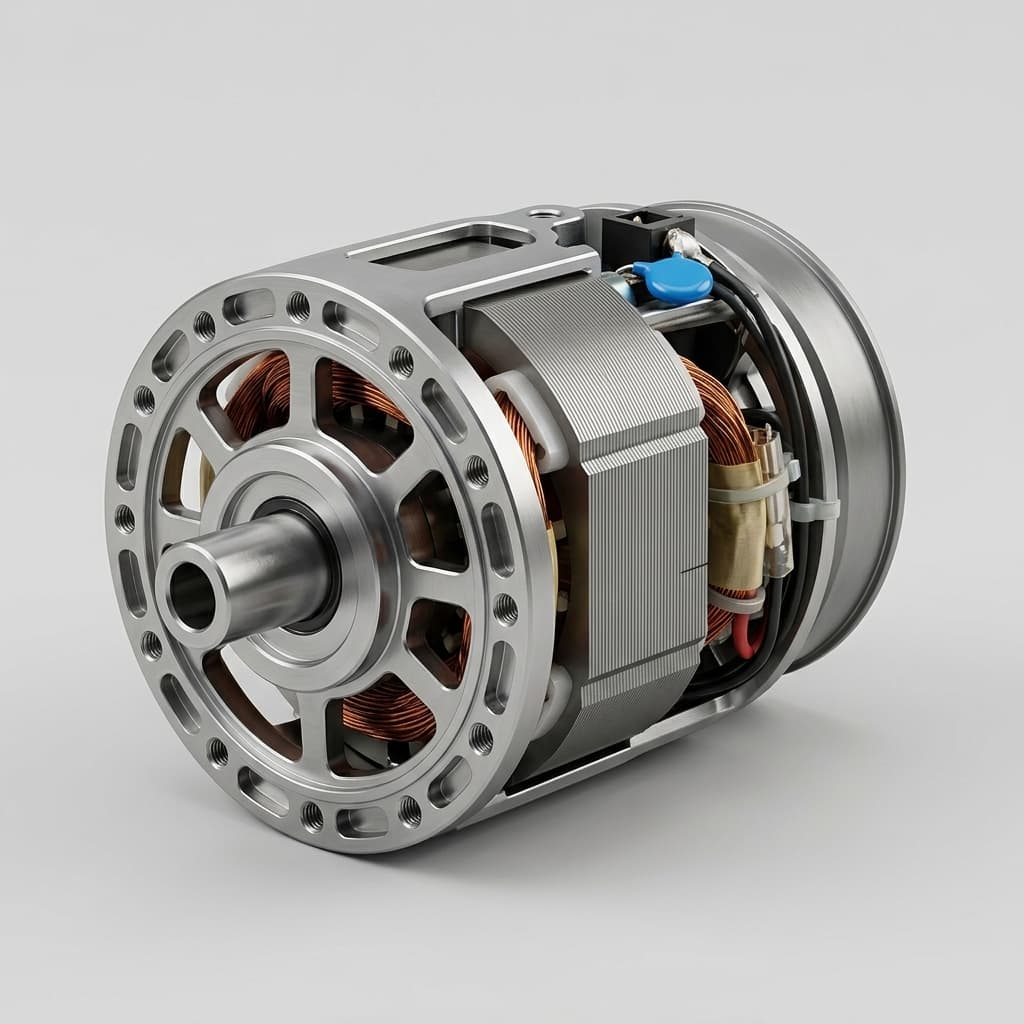
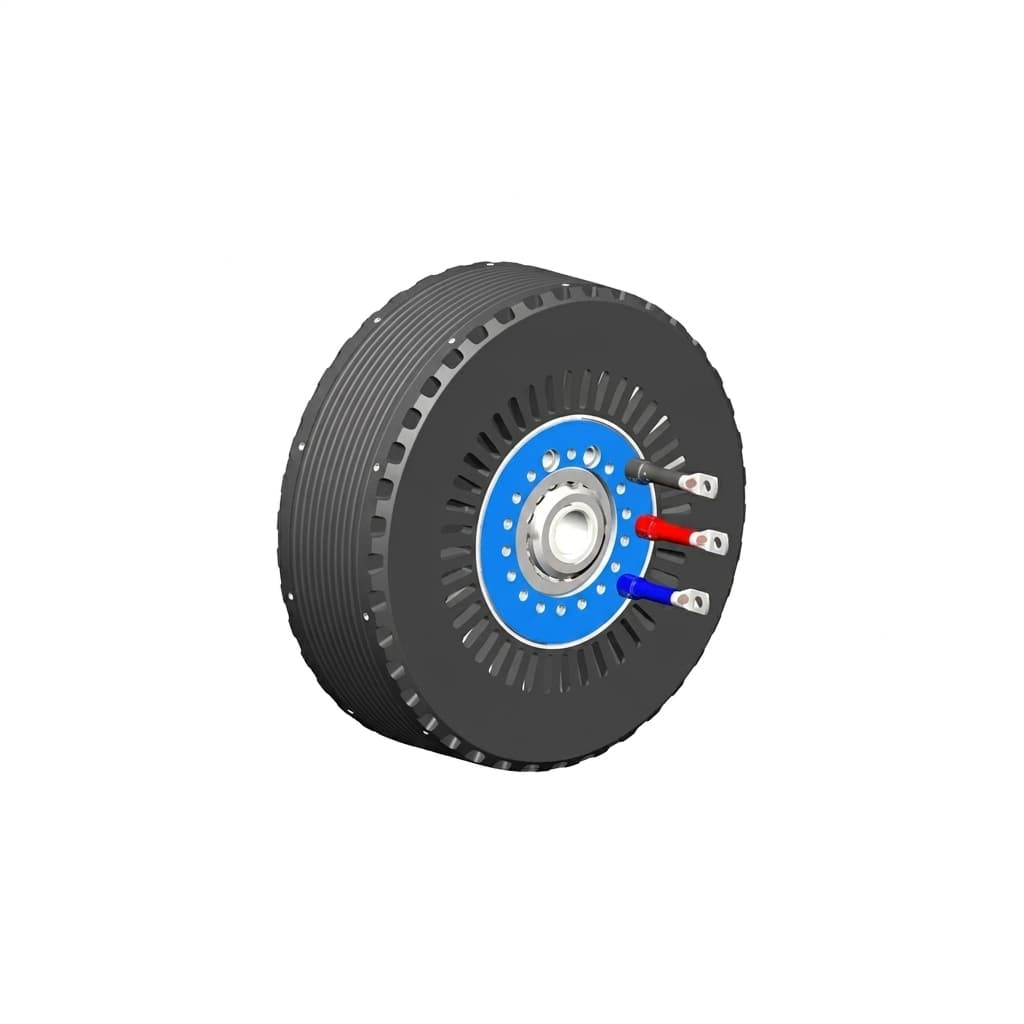
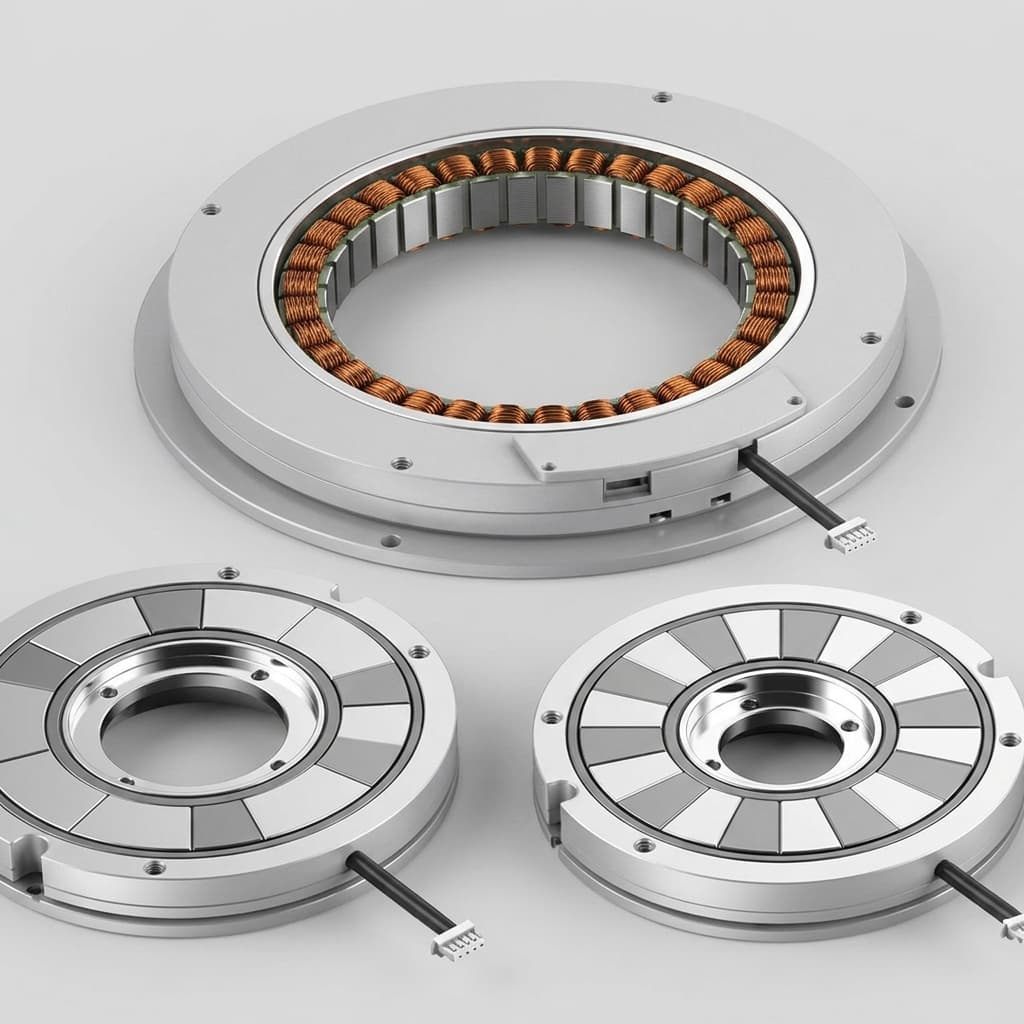
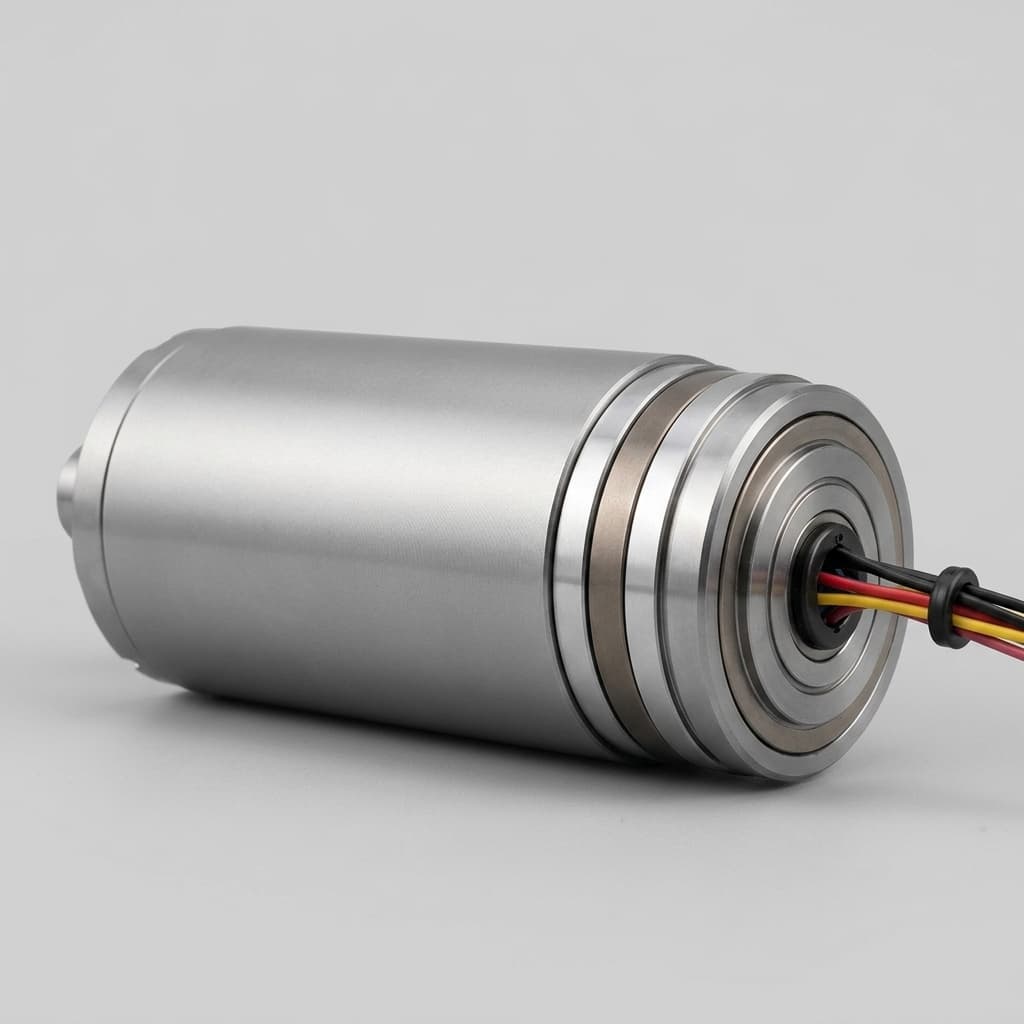
Frameless torque motors are the undeniable "muscles" of modern collaborative robots (cobots), humanoid platforms, unmanned ground vehicles (UGVs), and precision industrial automation. Their ability to deliver exceptional torque density directly at the joint, without the bulk of traditional motor housings, has made them the default choice for advanced kinematics. However, as the geopolitical landscape shifts and regulatory frameworks tighten, procurement managers and lead engineers are realizing that specifying a motor based solely on continuous torque and thermal rise is no longer sufficient.
Today, evaluating a frameless torque motor requires a rigorous analysis of its origin, the traceability of its raw materials, and its compliance with emerging federal procurement expectations. This comprehensive guide explores the intersection of frameless motor procurement, rare-earth supply chain dynamics, and NDAA (National Defense Authorization Act) compliance screening, providing robotics teams with the strategic framework needed to build resilient and defensible actuation systems.
Applicability note, published June 24, 2026: This guide is written for global robotics OEMs, procurement teams, and lead engineers screening motors for U.S. federal, defense-adjacent, critical infrastructure, and tier-one integrator programs. It is an engineering and sourcing framework, not legal advice; final compliance obligations depend on the contract, agency clause flow-downs, end use, bill of materials, and current supplier ownership records.
Historically, the scrutiny surrounding the National Defense Authorization Act (NDAA)—specifically Section 889, which restricts certain telecommunications and video surveillance equipment and services from covered entities—was heavily focused on network hardware and, subsequently, the commercial drone industry. The same procurement mindset now affects autonomous systems: buyers increasingly ask whether a robot's critical hardware, firmware, sensing, and communications stack can be documented rather than treated as a black box.
In 2026, this perimeter is no longer limited to drones. OEMs selling humanoids, security patrol robots, logistics AGVs, and manufacturing cobots into government, defense, or critical infrastructure sectors should expect more stringent supplier declarations, country-of-origin questions, and contract-specific representations before a program moves from prototype to production.
When a contract requires NDAA-linked source restrictions or covered-entity representations, the scrutiny goes far beyond the location of final assembly. A motor assembled in a trusted country can still create procurement risk if its electronics, magnet supply, or sub-tier manufacturing path cannot be documented. Procurement teams should pursue Bill of Materials (BOM) transparency, focusing primarily on:
Permanent Magnets: The origin of the Neodymium (Nd), Praseodymium (Pr), and Dysprosium (Dy) used in the rotor assembly. Where was the ore mined? Where was it refined into an oxide? Where was the alloy cast and magnetized?
Sensors and Encoders: The origin of the Application-Specific Integrated Circuits (ASICs) and microcontrollers used in the Hall effect sensors or absolute encoders embedded alongside the motor.
Stator Core and Copper: While less politically sensitive than rare earths, the sourcing of high-grade electrical steel and oxygen-free copper also faces tariff, availability, and trade-route vulnerabilities.
If your robotics company intends to bid on federal contracts, or if you supply tier-one integrators who do, treating the frameless motor as a "black box" component is a critical risk. You must treat it as an assembly of globally sourced sub-components, each requiring its own pedigree.
To understand why the frameless torque motor supply chain is so fragile, one must look at the physics of torque density. To achieve the compact dimensions and high torque output required for a cobot wrist or a humanoid hip joint, manufacturers rely on high-performance Neodymium-Iron-Boron (NdFeB) permanent magnets mounted on the rotor.
The vulnerability lies in the fact that the processing of rare-earth elements is not geographically diverse. While the raw ore may be extracted in various locations globally (including Australia, the U.S., and Africa), the intermediate steps—separation, refining into oxides, reduction into metals, and final sintering into magnetized blocks—are overwhelmingly concentrated in a single geopolitical region.
This concentration creates a single point of failure for the entire advanced robotics industry. Export controls, trade disputes, or logistical disruptions in this specific region can immediately halt global motor production. For a procurement manager, a supplier quoting a 4-week lead time is meaningless if that supplier relies on just-in-time delivery of NdFeB magnets from an untrusted or geopolitically exposed source.
The following architectural diagram illustrates the typical frameless motor supply chain, highlighting the "choke points" where compliance and availability risks are highest.
graph TD
    subgraph Raw Materials [Tier 4: Raw Material Extraction]
        RE[Rare Earth Mining]:::highRisk
        CU[Copper Mining]
        FE[Iron/Steel Mining]
    end

    subgraph Refining [Tier 3: Chemical Processing & Refining]
        RE_OX[Rare Earth Separation & Oxides]:::highRisk
        CU_REF[Copper Smelting]
        STEEL[Electrical Steel Production]
    end

    subgraph Components [Tier 2: Component Manufacturing]
        MAG[NdFeB Magnet Sintering & Coating]:::highRisk
        WIRE[Magnet Wire Drawing]
        LAMS[Stator Lamination Stamping]
        SENS[Hall Sensor / ASIC Fab]:::medRisk
    end

    subgraph Assembly [Tier 1: Motor Assembly]
        WIND[Stator Winding & Potting]
        ROTOR[Rotor Magnet Bonding & Banding]
        FINAL[Final Testing & QA]
    end

    subgraph OEM [OEM / End User]
        JOINT[Robot Joint Integration]
    end

    RE --> RE_OX
    CU --> CU_REF
    FE --> STEEL

    RE_OX --> MAG
    CU_REF --> WIRE
    STEEL --> LAMS

    MAG --> ROTOR
    WIRE --> WIND
    LAMS --> WIND
    SENS --> FINAL

    WIND --> FINAL
    ROTOR --> FINAL

    FINAL --> JOINT

    classDef highRisk fill:#ffebee,stroke:#c62828,stroke-width:2px;
    classDef medRisk fill:#fff3e0,stroke:#ef6c00,stroke-width:2px;
Note: Highlighted nodes represent critical paths where compliance evidence is commonly requested and supply chain disruption probability is highest.
When engineering teams debate between a direct-drive joint and a geared joint (using a harmonic or strain-wave reducer), they are typically arguing about backlash, control bandwidth, and mechanical stiffness. However, this architectural choice has profound implications for supply chain resilience.
A geared joint uses a high-speed, low-torque motor coupled with a high-ratio reducer (e.g., 100:1). Because the motor is spinning fast but producing little continuous torque natively, it can be relatively small.
Supply Chain Impact: A smaller motor requires a fraction of the copper and NdFeB magnetic material compared to a direct-drive system. This minimizes the financial impact of rare-earth price spikes and reduces the volume of critical materials you must audit. However, it shifts the supply chain risk to the precision reducer manufacturer.
A direct-drive joint eliminates the gearbox entirely, coupling the frameless motor's rotor directly to the load. To achieve the required holding and dynamic torque at low speeds, the motor must have a significantly larger diameter and stack length.
Supply Chain Impact: Direct-drive frameless motors are massive consumers of rare-earth magnets. A single large-aperture direct-drive joint can contain more NdFeB material than an entire geared cobot arm. If your engineering team commits to a direct-drive architecture, procurement must be prepared to secure a highly robust, high-volume magnet supply chain, as your exposure to material shocks is maximized.
In 2026, the era of procuring frameless motors purely based on the lowest piece price is ending. Forward-thinking OEMs evaluate vendors based on Total Cost of Ownership (TCO) and risk-adjusted pricing.
Choosing a low-cost supplier who obscures their BOM or relies entirely on covered entities may yield a lower unit cost in the prototype phase. However, the hidden costs manifest rapidly during mass production:
Market Exclusion: If your robot cannot satisfy the contract's NDAA-linked representations or covered-entity reviews, it may be disqualified from federal, defense, and infrastructure contracts. The cost of losing a major government bid dwarfs the savings on a cheaper motor.
Redesign Costs: If a supplier's critical component is sanctioned, you must find a replacement motor. Because frameless motors are mechanically integrated directly into your joint housing, changing a motor usually requires a complete mechanical redesign of the joint, invalidating prior thermal and lifecycle testing.
Tariffs and Import Duties: Geopolitical shifts often result in punitive tariffs on specific materials. A supplier without geographic diversification will pass those costs directly to you.
To properly vet a frameless motor supplier, procurement and engineering teams should use a structured evaluation matrix. This matrix elevates supply chain transparency to the same level of importance as electromagnetic performance. Use it alongside the frameless torque motor selection guide and thermal management guide when shortlisting motors for a new joint.
Evaluation Criteria
High Risk (Red Flag)
Moderate Risk (Acceptable with Mitigation)
Low Risk (Ideal Partner)
BOM Transparency
Refuses to disclose magnet origin or sub-tier suppliers.
Provides generic regional data, relies on distributor assurances.
Provides full traceability, Certificates of Origin down to the refinery level.
Manufacturing Location
Final assembly and component sourcing entirely within restricted/covered entities.
Final assembly in compliant region, but heavy reliance on restricted entities for critical parts.
Assembly and critical component sourcing in domestic or NATO-aligned/trusted regions.
Quality Certifications
Self-certified only, no external audits.
ISO 9001 certified.
ISO 9001, AS9100, and functional safety (ISO 13849/IEC 61508) compliant.
Design Control
Vendor owns the design, black-box approach, no customization allowed.
Vendor allows minor winding tweaks but guards magnetic design data.
Vendor shares thermal/magnetic models, operates as an engineering partner.
Supply Chain Buffers
Just-in-time manufacturing with no domestic safety stock.
Maintains modest regional inventory, vulnerable to shipping delays.
Maintains robust domestic safety stock, multi-sourcing for critical raw materials.
Prototype to Production
Prototypes built in an R&D lab; mass production outsourced to unknown third-party facilities.
Same company handles both, but in different facilities with separate quality systems.
Seamless transition; prototypes built on production-intent tooling with identical quality gates.
Logistics Resiliency
Sole reliance on a single port of origin or air-freight channel.
Multi-port origin, but limited buffer inventory against systemic delays.
Dual-sourcing strategy with geographically distributed warehouses and bonded inventory agreements.
Before placing an order for frameless motor prototypes or entering a mass-production agreement, execute this checklist to ensure your supply chain is resilient and compliant.
Request a detailed Bill of Materials (BOM). Do not accept a high-level summary. Demand the specific origins of the NdFeB magnets, the copper winding, and the electrical steel.
Verify project-specific NDAA and covered-entity exposure. Ask explicitly which contract clauses the supplier can support, whether any electronics or communications modules trigger Section 889-style reviews, and whether magnet or sensor sub-tier suppliers introduce country-of-origin risk.
Audit the magnet supply chain. Ask the supplier about their raw material buffer. Do they have long-term contracts with rare-earth refiners, or are they buying on the spot market?
Check for AS9100 or equivalent aerospace/defense certifications. Even if you are building a commercial cobot, a supplier with AS9100 certification demonstrates the rigorous traceability required for compliance audits.
Evaluate local support and engineering capabilities. Does the supplier have domestic engineers who can assist with stator integration, thermal potting, and rotor hub bonding, or is all expertise located overseas?
Require a change notification agreement. Ensure the contract strictly forbids the supplier from changing sub-tier component vendors (e.g., swapping magnet suppliers to save costs) without explicit prior approval from your engineering team.
Conduct a staged prototype validation. Order fit-check samples first, then electrical samples, and finally full thermal/motion validation samples to prove the supplier's consistency.
Confirm Specification Verification Flow. Establish who is responsible for verifying magnetic field saturation margins, insulation resistance tracking, and thermal limits at each production gate.
Implement Supplier Communication Channels. Setup dedicated issue-tracking for non-conformances (NCRs) directly communicating with the supplier's QA team rather than a generic sales email.
Effective communication with motor suppliers is critical for mitigating supply chain risks. Ensure your communication channels document the following fields:
Applicability Scope: Clearly define the environmental boundaries (temperature, humidity, vibration) the motor will face in your application.
Dimension Specifications: Document specific stator and rotor mechanical tolerances required for the interference fit.
Failure Mode Risks: Share potential application failure modes (e.g., high shock loads, prolonged stall conditions) so the supplier can advise on winding or potting upgrades.
Buyer Decision Points: Outline your exact milestone requirements (e.g., Prototype Phase A, Pilot Run B) and what metrics determine advancement.
While induction and switched reluctance motors do not require rare-earth magnets, they suffer from significantly lower torque density and lower efficiency compared to permanent magnet synchronous motors (PMSM). In a robot joint where space and weight are at an absolute premium, frameless NdFeB motors remain the only viable choice for high-performance applications.
No. A supplier can have a headquarters and final assembly facility in the U.S. or Europe but still import non-compliant components (like sensors or magnetized rotor assemblies) from restricted entities. Compliance requires auditing the sub-tier supply chain, not just the final point of assembly.
If you plan to use a thermal shrink fit or structural bonding for the stator, the dimensional tolerances and housing material compatibility are critical. You must procure from a supplier capable of maintaining exceptionally tight OD tolerances. If their machining quality varies, your integration process will fail, leading to scrapped housings and disrupted production lines.
Securing fully compliant, traceable motors often extends lead times during the initial setup phase, as the supplier must establish and verify audited material pipelines. However, once established, these pipelines are generally more stable and less susceptible to sudden regulatory embargoes, resulting in a more predictable long-term supply chain.
Custom windings are common to match specific drive voltages and current limits. Ensure your supplier can perform these customizations at their primary, audited facility rather than subcontracting the work. The winding process involves critical insulation and potting steps that must remain under strict quality control.
Acquisition.gov. FAR 52.204-24: Representation Regarding Certain Telecommunications and Video Surveillance Services or Equipment. Retrieved from https://www.acquisition.gov/far/52.204-24
The transition from a cost-optimized supply chain to a resilient, compliant supply chain is challenging, but it is a necessary evolution for the robotics industry. As cobots and humanoids move out of research labs and into critical infrastructure, defense logistics, and advanced manufacturing, the provenance of their components will be scrutinized as heavily as their performance.
By demanding transparency, utilizing rigorous vetting frameworks, and treating motor manufacturers as strategic engineering partners rather than transactional vendors, OEMs can secure the frameless torque motors necessary to dominate the next generation of automation.
Ready to secure your robot's actuation supply chain?
Explore our Compact Robot Joint Motors designed for high torque density and strict quality traceability, or contact our engineering team to discuss your specific integration and compliance requirements.
What does NDAA compliance mean for frameless torque motors?
NDAA compliance is not a universal motor certification. For federal, defense, or critical-infrastructure programs that flow down Section 889-style restrictions or covered-entity requirements, the motor package must be documented well enough to show that restricted equipment, electronics, and country-of-origin exposure do not violate the contract. This requires Bill of Materials (BOM) transparency and verified Country of Origin (CoO) evidence for critical subcomponents.
Why are frameless motors particularly vulnerable to supply chain shocks?
Frameless torque motors rely heavily on Neodymium-Iron-Boron (NdFeB) permanent magnets to achieve high torque density. The mining, refining, and magnetization of these rare-earth elements are highly concentrated geographically. Any export control changes or trade disputes immediately impact lead times and pricing for these motors.
Does choosing a direct-drive architecture increase supply chain risk?
Direct-drive systems eliminate gearboxes, which improves precision and reliability, but they require much larger, higher-torque motors. This means significantly more copper and rare-earth magnetic material per joint, increasing your exposure to material shortages or price volatility compared to using a small motor with a high-ratio strain-wave reducer.
How can procurement teams verify a supplier's compliance claims?
Procurement teams must move beyond self-attestation. Demand detailed supply chain mapping, third-party audits (like AS9100 for aerospace/defense applications), and verifiable certificates of origin. Staged prototype orders should also be used to audit the supplier's actual delivery capability and documentation rigor.
Is it possible to completely decouple from concentrated rare-earth supply chains?
In 2026, complete decoupling is extremely difficult and costly due to the lack of established 'mine-to-magnet' infrastructure outside of dominant regions. Instead of complete decoupling, OEMs are focusing on 'trusted supply chains'—diversifying assembly locations, utilizing NATO-aligned refining partnerships, and optimizing motor designs to reduce overall rare-earth dependency per joint.
Author
Jimmy Su
Frameless torque motor sourcing and application engineering. 10+ years in industrial motion control supply chain between China and global OEM markets.