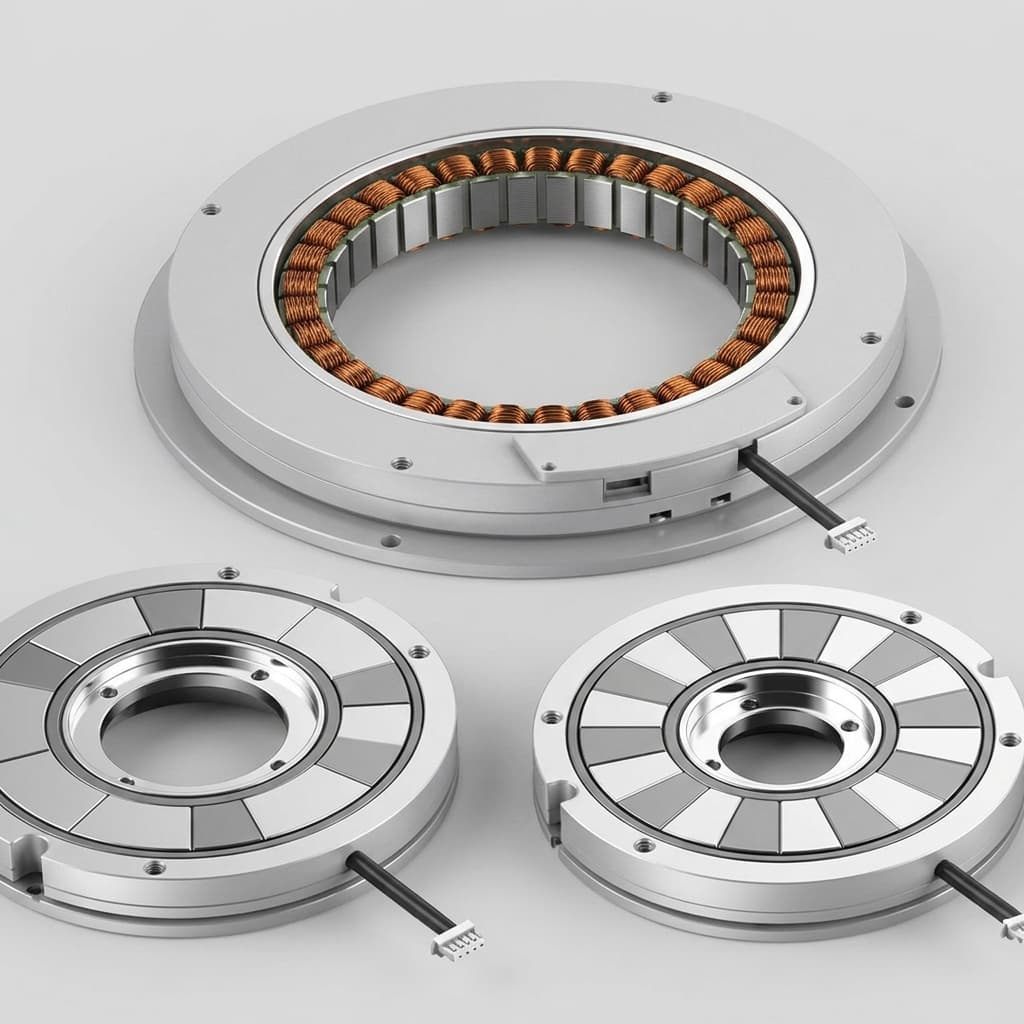
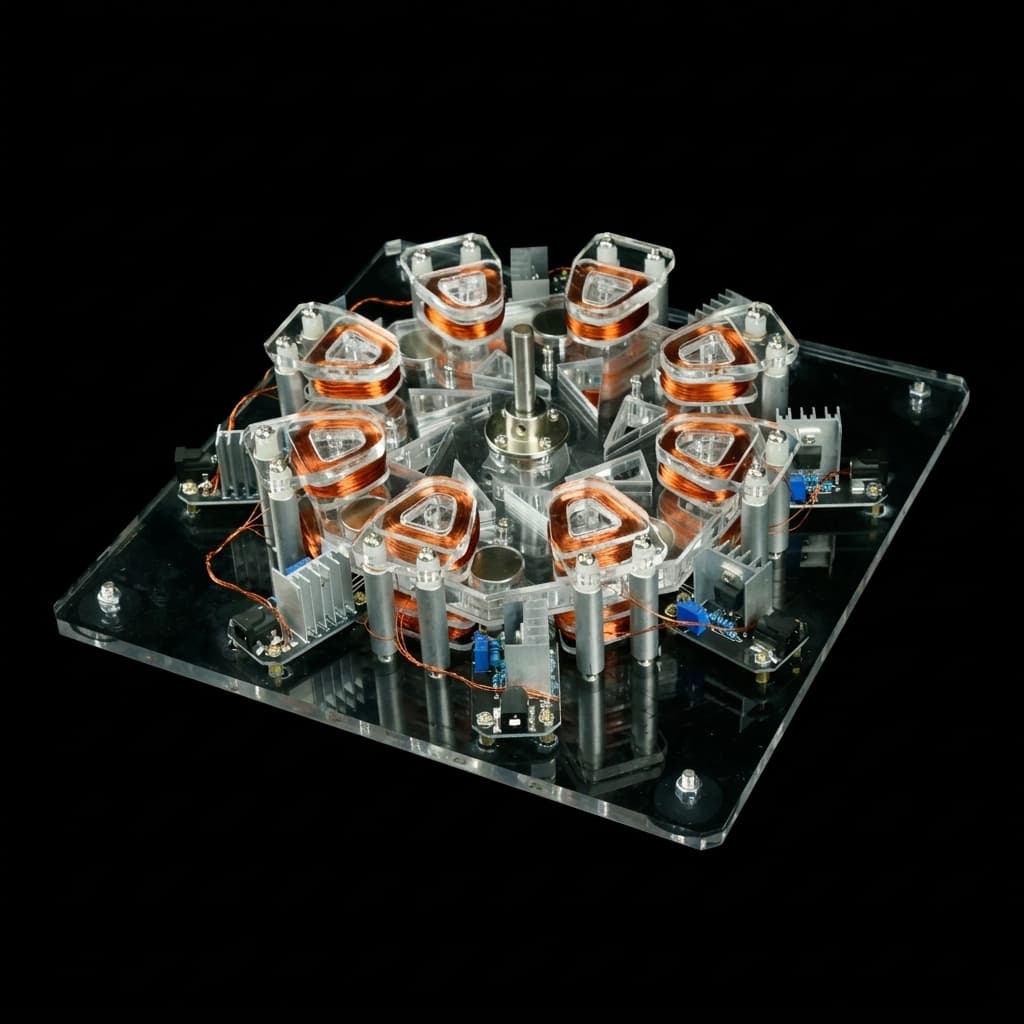
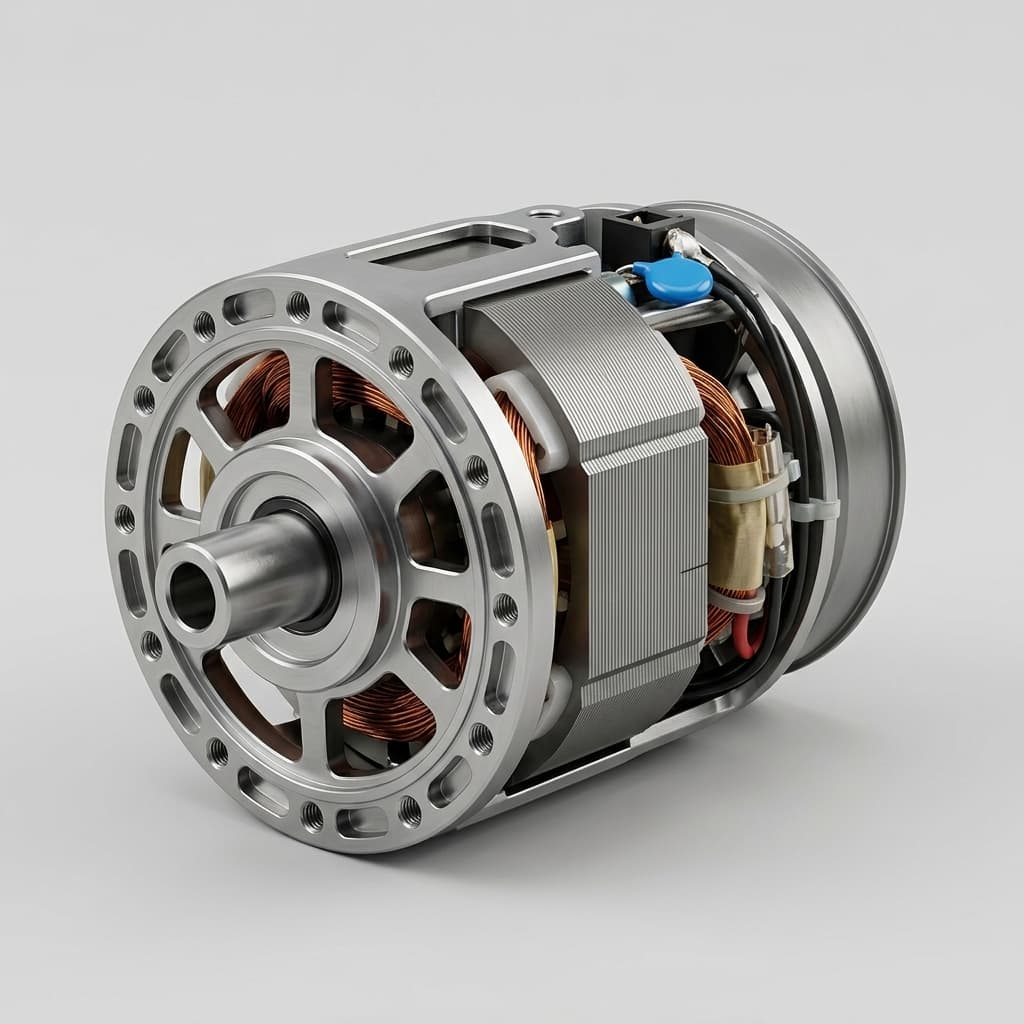
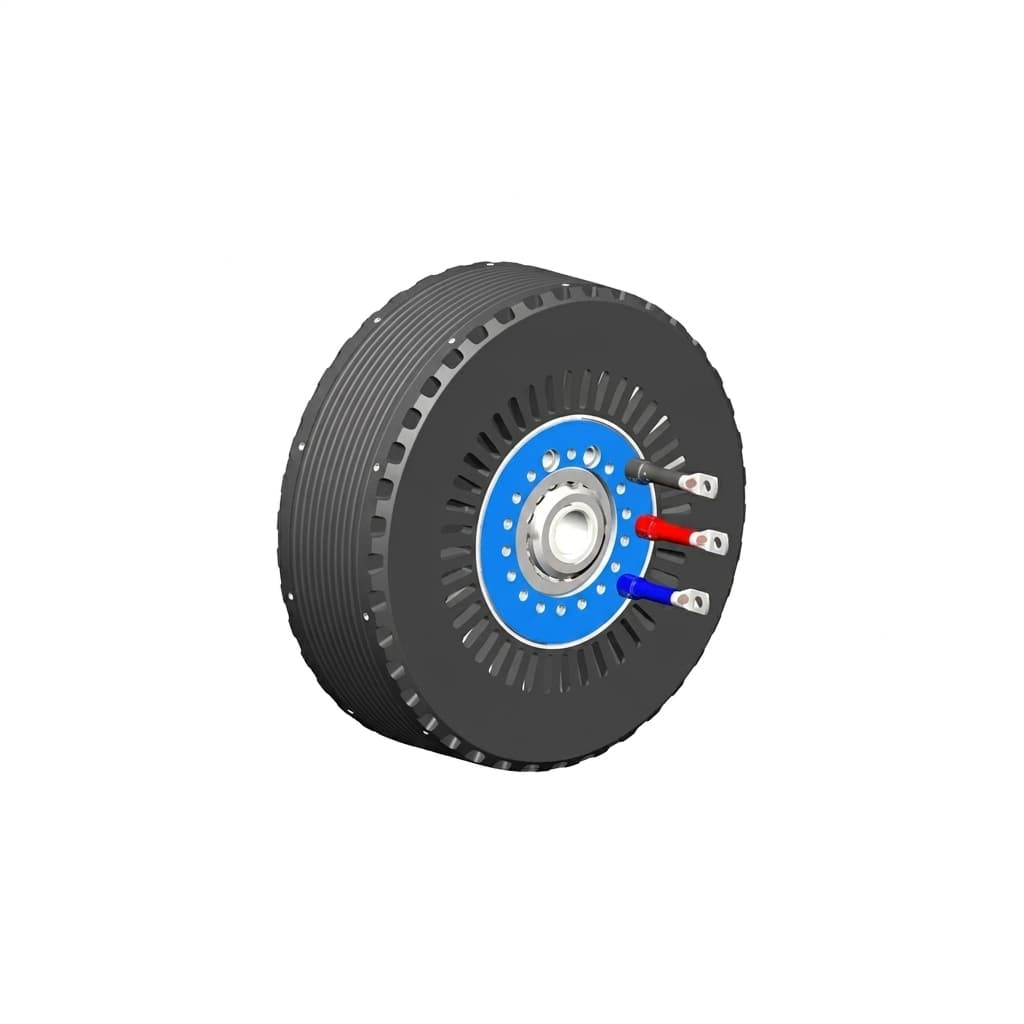
Sourcing 800V+ Frameless Torque Motors: Insulation and RFQ Guide
Use this guide to source 800V+ frameless torque motors with clear insulation, PDIV, SiC inverter, and IEC evidence checks before high-voltage RFQ approval.
The industrial automation landscape is undergoing a massive electrical shift. Driven by electric vehicle (EV) architectures and the demand for higher efficiency, heavy-duty robotics and multi-axis gantry systems are migrating from standard 300V or 600V DC buses to 800V+ DC architectures.
While an 800V system drastically reduces cable weight and I²R losses, it introduces severe stress on the frameless torque motor's stator. Standard stators that perform flawlessly at 300V will experience rapid, catastrophic failure when connected to an 800V drive, especially if the drive uses modern Silicon Carbide (SiC) switches.
For engineering and procurement teams, sourcing a high-voltage frameless torque motor is not just about a different winding. It requires verifying an entirely different class of insulation.
Published and reviewed on July 25, 2026, this guide is written for global OEM engineering, procurement, and supplier quality teams preparing an RFQ for 800V+ frameless torque motors. It applies to BLDC/PMSM frameless stator-and-rotor kits driven by high-voltage servo inverters, especially SiC-based drives. It is not a replacement for buyer-side safety certification, drive-cable validation, thermal testing, or supplier production release approval; use it as a pre-RFQ evidence checklist.
Modern 800V servo drives frequently employ SiC or GaN (Gallium Nitride) inverters. These wide-bandgap semiconductors switch incredibly fast. This rapid switching creates a steep voltage rise time, known as high dV/dt (often exceeding 10 kV/µs).
When this high-frequency pulse hits the motor terminals, the voltage does not distribute evenly across the winding. The first few turns of the copper coil absorb the brunt of the voltage spike. If the insulation system contains microscopic air pockets (voids), the high electric field ionizes the air, creating a Partial Discharge (PD)—a miniature corona effect.
Over time, this corona discharge chemically erodes standard wire enamel and slot paper until a phase-to-phase or phase-to-ground short circuit destroys the motor.
High-voltage insulation requires thicker paper and wire coatings. Because the physical slot area of the stator is fixed by the lamination geometry, thicker insulation means less room for copper. Less copper can result in slightly higher resistance and reduced continuous torque density.
You should specify an 800V frameless motor when:
The machine architecture demands sharing a single high-voltage DC bus across large servo axes.
Cable weight and drag chain limitations force a reduction in operating current.
You are driving heavy payloads requiring kW-level continuous power where I²R losses dominate.
You should avoid 800V (and stick to 48V - 300V) when:
Building small collaborative robots or lightweight gimbals.
The frameless motor is severely space-constrained, meaning every millimeter of slot fill is required for copper to hit continuous torque targets.
The servo drives use standard low-voltage switching frequencies.
When submitting an RFQ for a high-voltage frameless motor, do not accept a simple "Yes, we support 800V." Ask for engineering proof. Use this checklist to validate the supplier's technical depth:
Dielectric Testing Protocol: Do they perform Partial Discharge Inception Voltage (PDIV) testing on the production line, or only basic Hi-Pot tests?
Insulation System Class: Is the insulation system explicitly rated for inverter-duty and compliant with IEC 60034-18-41?
Wire Enamel Specification: Are they specifically sourcing corona-resistant (CR) magnet wire (e.g., polyimide with nano-fillers)?
Air Void Elimination: Does the supplier use Vacuum Pressure Impregnation (VPI) or vacuum epoxy potting to guarantee a void-free stator assembly?
Clearance and Creepage: Have the mechanical CAD models and lead wire exits been updated to reflect increased high-voltage clearance requirements?
Thermal / Torque Derating: Has the continuous torque rating been honestly adjusted to account for the slightly lower copper fill factor?
If you are migrating a multi-axis system to an 800V DC bus and need a frameless torque motor that can survive SiC inverter switching speeds, do not guess on insulation.
IEC 60034-18-41:2014: Qualification and type tests for Type I electrical insulation systems used in rotating electrical machines fed from voltage converters. IEC Webstore
IEEE Std 1812-2014: IEEE Guide for Testing Permanent Magnet Machines. IEEE SA Standards
Arclin Nomex® Electrical Insulation: Nomex material overview for electrical insulation applications. Arclin Nomex
Why are industrial robots moving to 800V DC buses?
An 800V DC bus reduces the current required to deliver the same power, allowing for thinner, lighter cables and reducing I2R losses. This is especially valuable in heavy-payload robotics and multi-axis gantries where cable management is a physical constraint.
Can I use a standard 300V frameless motor on an 800V drive if I adjust the current limit?
No. The voltage rating is determined by the stator's dielectric insulation system, not just the thermal current limit. Applying 800V to a standard motor will cause partial discharge and rapid insulation breakdown, leading to a short circuit.
What is partial discharge (PD) in a frameless motor?
Partial discharge is a localized dielectric breakdown of a small portion of the electrical insulation system under high voltage stress. Over time, it erodes the wire enamel and slot liners, eventually causing a catastrophic phase-to-phase or phase-to-ground short.
How does a SiC (Silicon Carbide) inverter affect the frameless motor?
SiC inverters switch much faster than traditional IGBTs, creating very steep voltage spikes (high dV/dt). This rapid rate of voltage change causes uneven voltage distribution across the motor windings, stressing the first few turns of the coil and increasing the risk of insulation failure.
Author
Matthew Lindholm - Principal Electromagnetic Drive Specialist
Principal Electromagnetic Drive Specialist specializing in high-torque-density motor topologies, slotless/frameless stator-rotor thermal management, and industrial motion control.